Fashion logistics runs on dates that cannot move. A summer collection that reaches the stores two weeks late ends up on sale, and a return that waits a week to be processed can miss its season. This guide explains how fashion logistics works, from storing garments to store deliveries and returns, and what to look for in a logistics partner.
Looking for a fashion logistics partner? Widem Logistics handles hanging and flat stock, store deliveries and returns from fulfilment centres across Europe and the UK. Discover our fashion logistics
What is fashion logistics?
Fashion logistics covers everything that happens to clothing and accessories between the factory and the customer: receiving and storing stock, picking and packing orders, delivering collections to stores and retail partners, transport between countries and handling returns. It is planned around collection dates and seasonal peaks.
Most fashion brands sell through several channels at once: their own webshop, marketplaces, their own stores and wholesale partners such as department stores and multi-brand shops. Each channel has its own packing rules, labels and delivery rhythm, but ideally all orders come from the same stock.
What makes fashion different from most other sectors is the number of variants. One item in six sizes and five colours already means thirty different stock keeping units. Multiply that by a full collection and a warehouse quickly manages thousands of SKUs that each sell at a different pace.
Five challenges in fashion logistics
Fixed collection dates and seasons
Summer collections usually need to be in store by early April and winter collections by early October. New drops often have to be on the shelf before the weekend. Everything in the warehouse is planned backwards from those dates: when the goods arrive from production, when they are checked and prepared, and when they leave for the stores. A delay at any step shows up directly in sales.
Hanging and flat stock
Coats, dresses, suits and shirts often travel on hangers so they arrive without creases. This is called GOH, garments on hangers. Knitwear, T-shirts and jeans are usually stored and shipped folded. A fashion warehouse needs both: hanging storage, flat shelving, and bulk and bin locations for smaller items. The space each type needs changes with the season, so a fixed layout rarely fits for long.
Sizes and colours: picking at depth
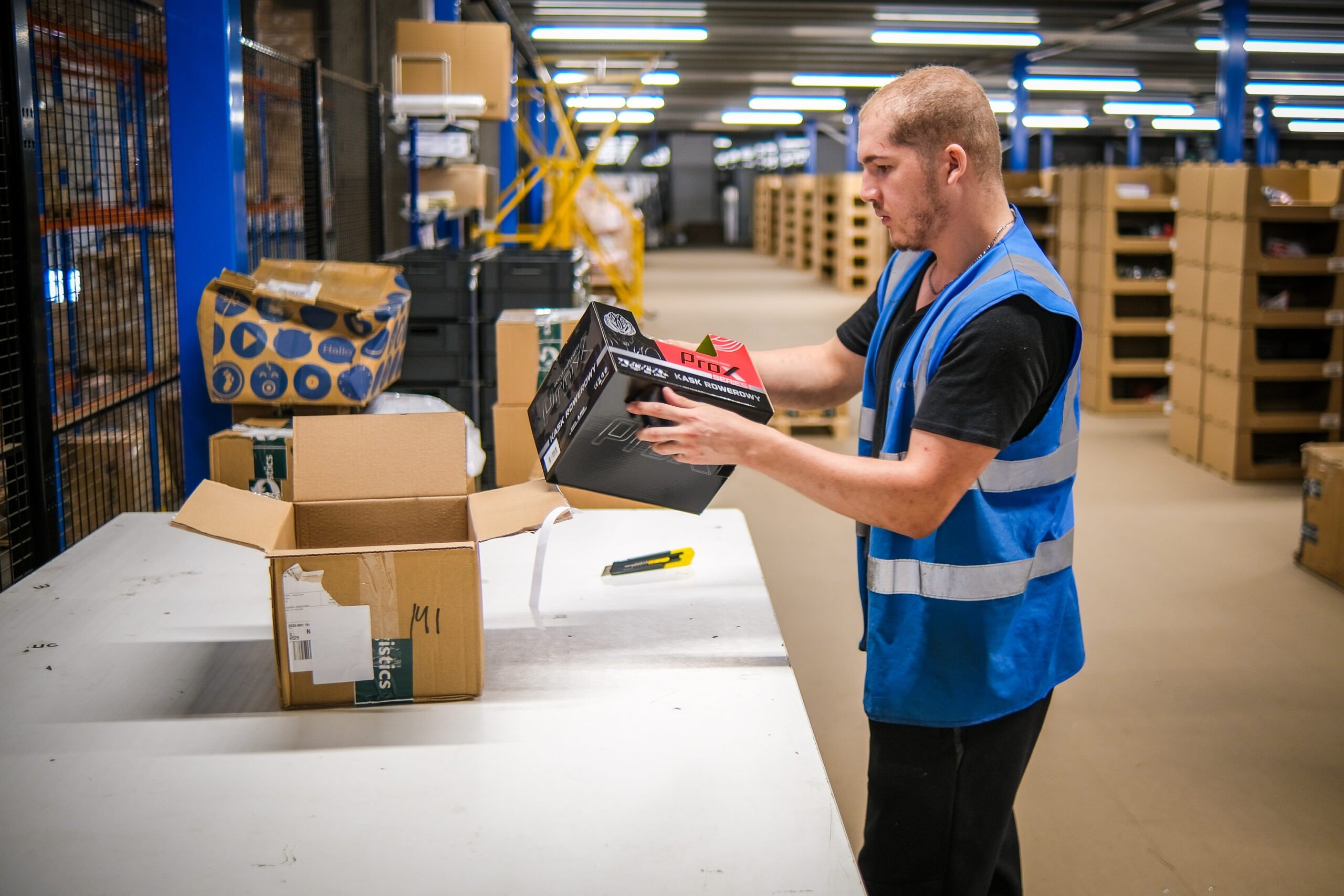
With thousands of SKUs, picking mistakes are easy to make. An order for a medium in navy that arrives as a large in black costs a return, a new shipment and often a customer. Accurate stock locations, scanning at every step and clear product labels keep picking right at that depth, from XS to XXL.
Deliveries to stores and wholesale partners
Stores need their collections on fixed dates, often outside opening hours and in city centres with access rules. Department stores and wholesale partners add their own requirements for labels, hangers, packaging and delivery windows. Stock also has to move between stores when one location has too much of a size and another runs out. Read more about retail distribution and the role of a distribution center.
High return rates
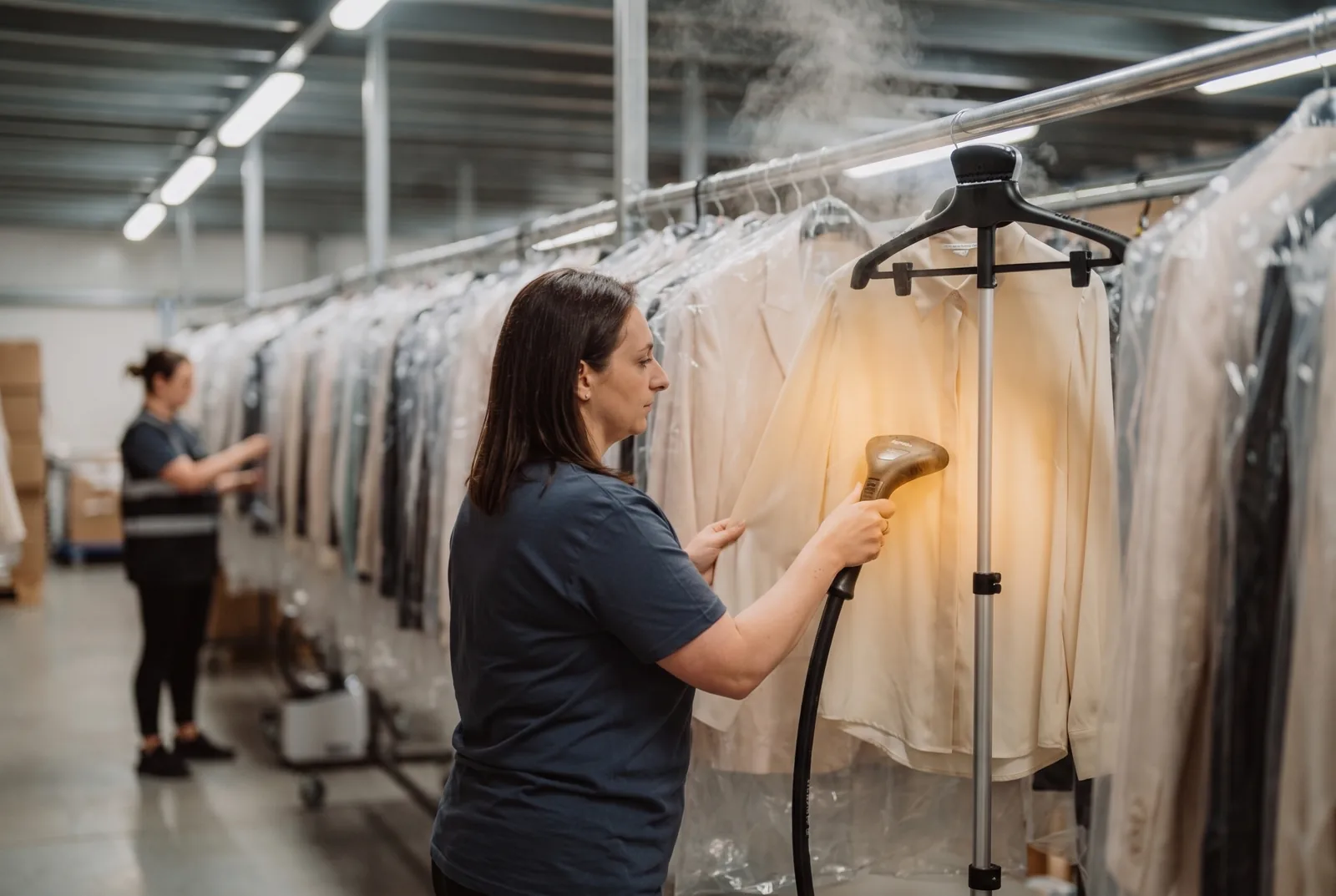
Online fashion has some of the highest return rates in e-commerce, mainly because customers order several sizes and keep the one that fits. What counts is how fast a returned garment is back on sale. Every return has to be checked, often steamed or cleaned, relabelled and put back into stock. Return data also tells a brand which items come back most often and why, which helps to bring the return rate down over time.
The extra work behind a fashion order
Fashion orders often need more than picking and packing. Typical extra work includes:
When this work happens in the same flow as the picking, it is faster and cheaper than when it has to be planned as a separate job. Read more about value-added services.
What to look for in a fashion logistics partner
Ask these questions when you compare logistics partners:
Frequently asked questions
GOH stands for garments on hangers: clothing that is stored and transported on hangers so it arrives without creases. It requires hanging storage in the warehouse and vehicles equipped for hanging garments.
An SKU, or stock keeping unit, is one specific variant of a product. A shirt in five sizes and three colours counts as fifteen SKUs, and each one has its own stock level and storage location.
Fashion warehousing is the storage of clothing and accessories in a warehouse set up for fashion, with hanging and flat storage, space that changes with the season and processes for returns.
Mainly because customers cannot try clothes on before they buy online. Many order several sizes or colours and send back what does not fit or suit them.
Garments that crease easily, such as coats, dresses, suits and shirts, are usually stored hanging. Knitwear, T-shirts and jeans are usually stored folded, which takes less space.
Looking for a fashion logistics partner?
Tell us your collection dates, your share of hanging stock and your return rate, and we will look at how to run your flow.